Female Infertility

In recent years, increasing numbers of infertility patients are using acupuncture during their IVF to increase the rate of pregnancy. The tremendous growth began with the publication of Dr. Paulaus Wolfgang’s ground breaking clinical study in 2002.

Groundbreaking Study

The study found that clinical pregnancy rate was 41.5% higher in treatment group when patients received pre and post ET (embryo transfer) acupuncture. Two subsequent clinical studies, conducted by Lars Westergaard et al and Stefan Dieterle et al also demonstrated that acupuncture around ET increased the clinical pregnancy rate by 33.3% and 55.5%, respectively. That is an impressive 43.43% average improvement for a 2% of incremental cost of the IVF, assuming $200 for pre and post IVF acupuncture, and $10,000 for an IVF.

Increased Awareness & Acceptance

The proliferation of Internet technologies, such as Google and chart-room, provided easy access to aforementioned clinical studies and a platform for infertility patients to share their positive experience with acupuncture among IVF patients.

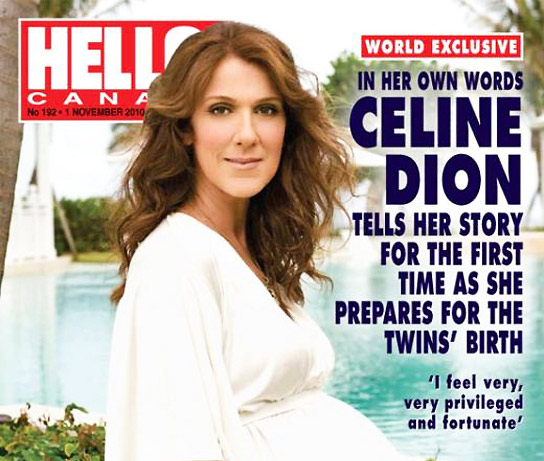
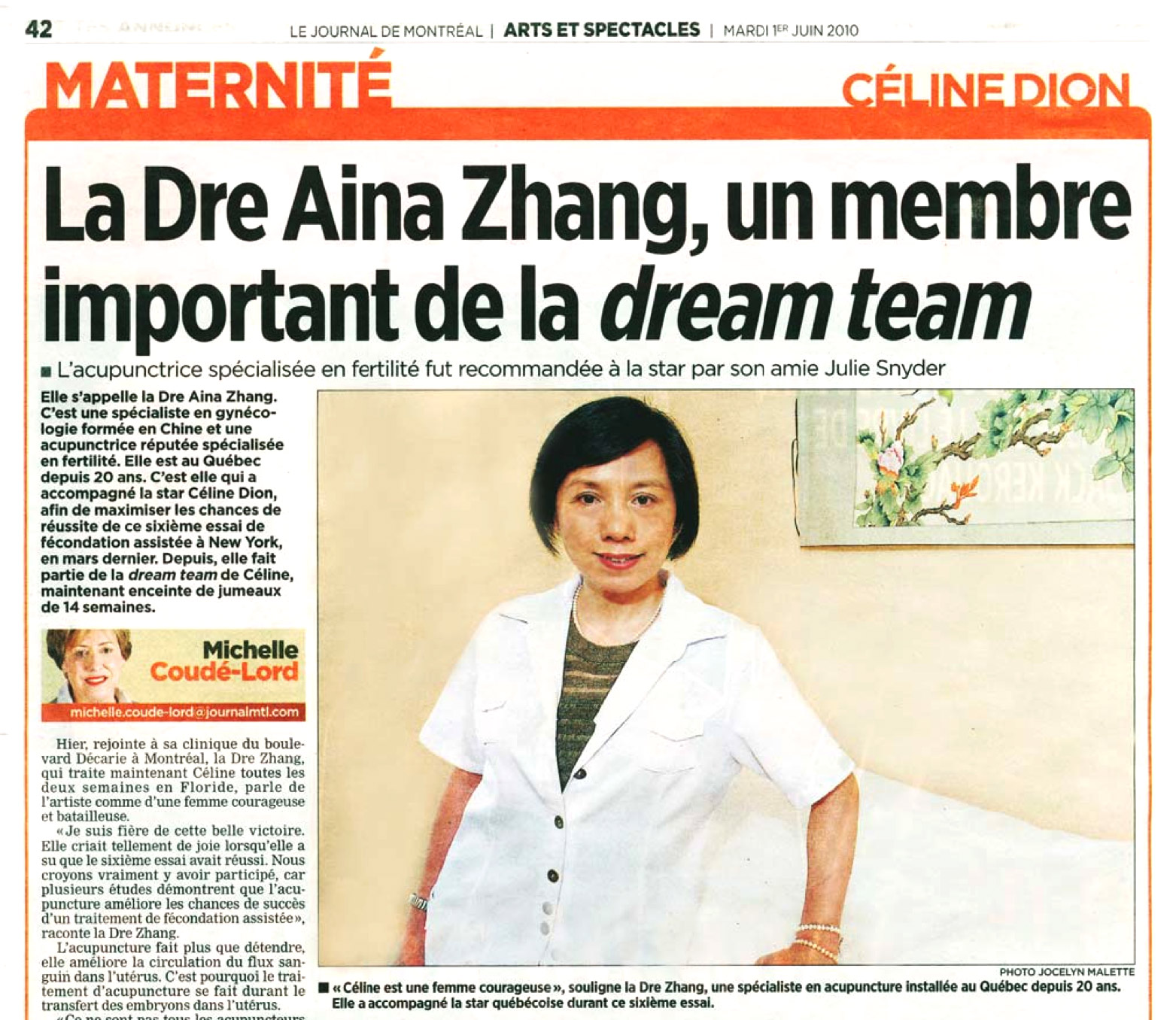
In 2010, acupuncture, as a viable alternative and complementary therapy to western ART (Assisted Reproductive Technology), received a major boost when celebrities, such as Julie Snyder, and international super star Celine Dion, publicly endorsed acupuncture in their successful pursuit of parenthood.

The year 2012 marks another turning point – half of the Montreal’s infertility clinics are either offering on-site, pre and post embryo transfer acupuncture or planning to do so in the near future, due to an ever increase amount of support from recent clinical studies and patients’ demand.

Finding an experienced acupuncturist and faithfully following the requirements – whether it’s drinking bitter herbal teas, changing your lifestyle or receiving regular acupuncture treatments – are the keys to successful fertility treatment.
Au cours des dernières années, un nombre croissant de patients ont eu recours à l’acupuncture pendant leur démarche en FIV afin d’augmenter les chances d’obtenir une grossesse. Cette évolution médicale importante a été initiée par la publication de la recherche innovatrice du Dr Paulus Wolfgang en 2002.

Recherche clinique innovatrice

La recherche de Paulus a démontré que les taux de grossesse clinique étaient supérieurs de 41,5% dans le groupe de patients qui ont reçu un traitement d’acupuncture avant et après le transfert d’embryon. Deux autres études subséquentes, conduites par Lars Westergaard et al. et Stefan Dieterle et al., ont aussi démontré que l’acupuncture autour du transfert d’embryon augmentait le taux de grossesse clinique de 33, 3% et de 55, 5 % respectivement. Cela représente une augmentation remarquable des taux de réussite d’une moyenne de 43, 3% pour un coût total de 2 % de la FIV. (En supposant 200 $ pour les traitements d’acupuncture pré et post-FIV, et 10 000 $ pour une FIV.)

Une sensibilisation et une acception accrues

La prolifération des technologies reliées à internet, comme Google et les forums de discussion permettent un accès facile aux recherches cliniques mentionnées ci-haut. Ces nouveaux moyens de communication offrent une plate-forme permettant aux patientes atteintes d’infertilité de partager leurs expériences positives en acupuncture avec celles qui sont en démarche pour une FIV.

En 2010, l’acupuncture en tant qu’alternative viable et thérapie complémentaire aux technologies de reproduction assistée, a connu un essor important lorsque des célébrités telles que Julie Snyder et la superstar internationale Céline Dion, ont publiquement reconnu l’acupuncture comme un élément important dans la poursuite de leur rêve de devenir parent.

L’année 2012 marque un tournant – la moitié des cliniques de fertilité de Montréal prévoit offrir dans un futur rapproché ou offre déjà de l’acupuncture pré- et post transfert d’embryon sur les lieux mêmes de leur clinique. Les nombreuses études cliniques récentes qui soutiennent le recours à l’acupuncture lors de la FIV sont à l’origine de ce changement étonnant. En effet, l’influence de ces études se traduit par une augmentation importante de patients qui demandent à ce que l’acupuncture soit intégrée à leur démarche en procréation assistée.

Trouver un acupuncteur expérimenté et suivre fidèlement ses recommandations – qu’il s’agisse de boire des herbes amères, de modifier votre style de vie ou de recevoir régulièrement des traitements d’acupuncture – est la clé du succès des traitements de l’infertilité par acupuncture.

Assurez-vous d’avoir jeté un coup d’œil à la section Avantages Sinocare avant d’arrêter votre choix sur un acupuncteur pour le traitement de l’infertilité par acupuncture.近年来,越来越多的不孕症患者在IVF的治疗期间接受针灸治疗,以提高受孕的机会,特别是在2002年Paulaus Wolfgang医生突破性的临床研究发表报道后。

突破性的临床研究

此研究发现,治疗组患者在胚胎移植前后接受针灸治疗后受孕率提高了41.5%。继此之后,由Lars Westergaard等人及Stefan Dieterle等人所进行的两个临床研究也表明,在胚胎移植前后的针灸治疗可分别提高33.3%及55.5%的临床受孕率,即平均43.43%的临床改善。而经费方面,只需要增加IVF2%的总费用。也就是说,假设一次IVF 的总费用为1万加元,胚胎移植前后的针灸治疗费仅需200加元。

认知度和接纳度有所提高

随着现代网络技术的发展,如谷歌及聊天室的出现,使IVF患者更容易了解到以上提及的临床研究结果,并为她们分享针灸治疗的有效性提供了良好的平台。

2010年,朱莉西德及国际巨星席琳迪翁等明星,在成功受孕之后对针灸的疗效公开表示认同。此后,针灸作为西方辅助生育技术的一种有效可行的替代及补充疗法开始得到普及。

另一个重要的转折点发生在2012年,因越来越多的临床报道对针灸的有效性提供了科学依据,以及随着患者的需求的进一步增大,蒙特利尔半数的不孕症诊所开展了或即将开展胚胎移植前后的针灸会诊治疗服务项目

寻求一位经验丰富的针灸师的帮助以及严格遵守医生嘱咐(无论是服用苦涩的中药还是改变日常生活习惯,或接受定期的针灸治疗),对不孕症的成功治疗都非常关键。

请你在决定在哪进行不孕症的针灸治疗前,务必点击并了解Sinocare医疗特色与优势

Chinese Medicine treatment

Like western medicine, the first step to successful treatment with TCM is proper diagnosis. Once the syndromes (the nature of illness) are diagnosed, the TCM practitioner has already formed an opinion on the pathogenic factors, pathogenesis, location, and prognosis.

In my practice, I pay more attention to the syndromes than the disease itself. This means that if I find the same disease in a number of patients and determine that they have different syndromes, I treat each case differently. For example, two female patients each have polycystic ovarian syndromes (PCOS), but one patient’s PCOS is caused by Spleen and Kidney Deficiency, and the other by Liver Qi Stagnation. In treating each of these patients, I would use very different acupuncture points and herbs.

When the diseases presented in different patients are different, but the syndromes are the same, I treat the patients similarly. For example, if I have three infertility patients, one with PCOS, another with endometriosis and a third with premature ovarian failure (POF), and I find that they are all caused by Kidney Deficiency, then I would use very similar acupuncture points and herbs to treat these three patients.

Depending on the diagnosed syndromes, the patient’s personal constitution and diagnosis from the fertility clinic, I then outline a treatment objective. To achieve the treatment objective, I often use a combination of acupuncture and Chinese herbal medicine. Sometimes, nutritional supplements and dietary regulation are also used
Tout comme en médecine occidentale, la première étape d’un traitement en médecine chinoise est une évaluation en médecine chinoise appropriée. Une fois que les syndromes (la nature de la maladie) ont été identifiés, le praticien de médecine chinoise s’est déjà formé une opinion sur les facteurs ayant contribués à l’apparition de la maladie, comment celle-ci à évoluée, sur sa localisation et le pronostic.

Dans ma pratique, je porte plus attention aux syndromes qu’à la maladie elle-même. Cela signifie que si je rencontre la même maladie chez de nombreux patients, mais que je constate qu’ils ont des syndromes différents, je traiterai chaque cas différemment. Si nous prenons pour exemple deux femmes présentant un syndrome des ovaires polykystiques (SOPK). Chez une des patientes, le trouble est causé par une déficience de la Rate et des Reins, alors que, pour l’autre, la maladie est engendrée par une Stagnation du Qi du Foie. Dans le traitement de ces deux patientes, j’utiliserai des points d’acupuncture et des herbes très différentes.

À l’opposé, lorsque la maladie est différente, mais que les syndromes sont les mêmes, je vais traiter les patients de manière similaire. Si nous prenons pour exemple trois patientes infertiles. L’une d’elles présente un SOPK. L’autre, une endométriose et la troisième, une insuffisance ovarienne prématurée. Si je constate qu’elles ont toutes une déficience des Reins, alors j’utiliserai des points d’acupuncture et des herbes chinoises très similaires chez les trois patientes.

Les syndromes qui ont été déterminés, la constitution du patient et son diagnostic médical me permettent de dresser un objectif de traitement. Pour atteindre cet objectif, j’utilise le plus souvent une combinaison d’acupuncture et d’herbes chinoises. Parfois, j’utilise également des suppléments alimentaires et des recommandations alimentaires.
跟西医一样,中医成功治疗的第一步是辨证准确,一旦辨证(疾病的性质)准确,就说明中医师已经对疾病的病因、病机、病位及预后等形成了一定的思路。

我在临床上对证的重视超过疾病本身,就是说在患有同一疾病的许多病人身上往往存在不同的证型,治疗也随证而异。比如,两个多囊卵巢综合症的女性患者,一个辨证为脾肾两虚,而另一个为肝气郁结,治疗方面也因此不同,我会选择不同的针灸穴位及中药。

而另一方面,不同疾病的患者若辨证相同,治疗则相似。比如,若三个分别患有多囊卵巢综合症、子宫内膜异位症及卵巢早衰的不孕症患者来诊,若发现均由肾虚引起,治疗上我会选用相似的针灸穴位及中药。

根据中医证型、患者的体质及不孕症诊所的西医诊断,我先确定一个总的治疗目标,而为了达到此治疗目标,我常将针灸与中药结合运用于临床,有时也使用营养补充剂及嘱咐患者注意饮食调节。

Infertility

In recent years, increasing numbers of infertility patients are using acupuncture during their IVF to increase the rate of pregnancy. The tremendous growth began with the publication of Dr. Paulaus Wolfgang’s ground breaking clinical study in 2002.

Groundbreaking Study

The study found that clinical pregnancy rate was 41.5% higher in treatment group when patients received pre and post ET (embryo transfer) acupuncture. Two subsequent clinical studies, conducted by Lars Westergaard et al and Stefan Dieterle et al also demonstrated that acupuncture around ET increased the clinical pregnancy rate by 33.3% and 55.5%, respectively. That is an impressive 43.43% average improvement for a 2% of incremental cost of the IVF, assuming $200 for pre and post IVF acupuncture, and $10,000 for an IVF.

Increased awareness and acceptance

The proliferation of Internet technologies, such as Google and chart-room, provided easy access to aforementioned clinical studies and a platform for infertility patients to share their positive experience with acupuncture among IVF patients.

Complementary therapy is embraced

Most recently, acupuncture, as a viable alternative and complementary therapy to western ART (Assisted Reproductive Technology), received a major boost when celebrities, such as Julie Snyder, and international super star Celine Dion, publicly endorsed acupuncture in their successful pursuit of parenthood.

Finding an experienced acupuncturist and faithfully following the requirements – whether it’s drinking bitter herbal teas, changing your lifestyle or receiving regular acupuncture treatments – are the keys to successful fertility treatment.

Male Infertility

Acupuncture has been increasingly used as an alternative and complementary treatment for female infertility, in recent years. However, the significant therapeutic potential of acupuncture, in the treatment of male infertility, is still largely unknown. Male factors are contributory in at least 50% of infertile couples (Collins, 1989), and yet it is notoriously difficult to treat. There are several non-surgical therapies, but the current trends is toward using micro-surgical techniques, such as ICSI, MESA and TESE, which exclusively use the best few sperms of however poor quality1.

Presently, there are a few dozens of published clinical studies published to support this ancient therapy in the treatment of male infertility. The results of these clinical studies are encouraging and have shown significant potentials to increase both the quantity and quality of sperm.

In my clinical observation, male infertility patients generally respond slower but better than their female counterparts. Since the sperm may take two and half months to form, the effectiveness of the treatment for certain conditions could only be assessed after three to six months.

On the other hand, I have observed that male patients are, unfortunately, much less likely to follow the full course of treatment. It is unclear if this phenomenon is due to lack of information, education or willingness to try an unfamiliar alternative treatment.

Unexplained Infertility

For up to 40% of Infertility patients, their infertility has no apparent cause after a full series of Western medicine tests and assessments are completed.

Don’t despair, an experienced acupuncturist can provide a complete assessment from Chinese medicine’s perspective. In most cases, reasons could be found. Please contact Sinocare for additional information.Pour plus de 40 % des patients infertiles, même après avoir effectué une série complète d’évaluation et de tests biomédicaux, aucune cause apparente ne peut expliquer l’infertilité.

Il ne faut pas désespérer. Un acupuncteur expérimenté peut vous offrir une évaluation complète selon le point de vue de la médecine chinoise. Dans la plupart des cas, la médecine chinoise permet de comprendre le problème sous-jacent à une infertilité inexpliquée. Contacter Sinocare pour plus de renseignements..For up to 40% of Infertility patients, their infertility has no apparent cause after a full series of Western medicine tests and assessments are completed.

Don’t despair, an experienced acupuncturist can provide a complete assessment from Chinese medicine’s perspective. In most cases, reasons could be found. Please contact Sinocare for additional information.

Case Study

To illustrate the healing potential of acupuncture and Chinese herbal medicine, I list three recent case histories for your reference.

Male Patient History Western Medicine Diagnosis & Treatment Chinese Medicine Diagnosis & Treatment
Age 33,
Secondary Infertility: 24 months
Lower sperm count and low motility; sperm antibody Kidney Essence and Qi deficient; acupuncture weekly and herbs daily for 4 months
Age 36
Primary Infertility: 24 months
Poor morphology 10%; poor motility (7% moving rapidly) Kidney Qi deficient; herbal medicine daily for 7 months
Age 33
Primary Infertility: 18 months
Low sperm count (13.2 million/ml); poor motility (3% moving rapidly) Damp-heat accumulation in liver/gall bladder meridian; acupuncture weekly and herbal medicine daily for 5 months

Pour illustrer le potentiel thérapeutique de l’acupuncture et des herbes chinoises, j’ai énuméré trois cas récents pour que vous puissiez vous y référer.

Male Patient History Western Medicine Diagnosis & Treatment Chinese Medicine Diagnosis & Treatment
Age 33,
Secondary Infertility: 24 months
Lower sperm count and low motility; sperm antibody Kidney Essence and Qi deficient; acupuncture weekly and herbs daily for 4 months
Age 36
Primary Infertility: 24 months
Poor morphology 10%; poor motility (7% moving rapidly) Kidney Qi deficient; herbal medicine daily for 7 months
Age 33
Primary Infertility: 18 months
Low sperm count (13.2 million/ml); poor motility (3% moving rapidly) Damp-heat accumulation in liver/gall bladder meridian; acupuncture weekly and herbal medicine daily for 5 months

To illustrate the healing potential of acupuncture and Chinese herbal medicine, I list three recent case histories for your reference.

Male Patient History Western Medicine Diagnosis & Treatment Chinese Medicine Diagnosis & Treatment
Age 33,
Secondary Infertility: 24 months
Lower sperm count and low motility; sperm antibody Kidney Essence and Qi deficient; acupuncture weekly and herbs daily for 4 months
Age 36
Primary Infertility: 24 months
Poor morphology 10%; poor motility (7% moving rapidly) Kidney Qi deficient; herbal medicine daily for 7 months
Age 33
Primary Infertility: 18 months
Low sperm count (13.2 million/ml); poor motility (3% moving rapidly) Damp-heat accumulation in liver/gall bladder meridian; acupuncture weekly and herbal medicine daily for 5 months

Observed Benefits

There are many additional benefits that I have observed during my twenty years of practice:

  • It is an effective treatment for unexplained infertility.
  • It offers new hope for patients who are unwilling or unable to conceive with the help of Assisted Reproductive Technology (ART) alone.
  • It relieves physical and emotional stresses associated with infertility and its treatment.
  • It has virtually no short-term or long-term side effects.
  • It is relatively inexpensive and may be covered by private insurance.

Reported Benefits

According to recently published clinical studies (please go to Research section for a comprehensive list of relevant studies and articles), acupuncture and Chinese herbal medicine could significantly:

  • Increase the percentage of normal-form sperm for idiopathic infertility patient.
  • Increase sperm motility and intactness of the axonema.
  • Increase the sperm quality (morphology) .
  • Reduce the existence of sperm antibody.
  • Reduce varicocele.
  • Improve overall quality of sperms (counts, motility and morphology) , and moderately improve azoospermia.
  • Remedy retrograde ejaculation and erectile dysfunction.
  • Reduce sperm disomy (an extra chromosome).

Age and Female Infertility

One of the most common causes of female infertility today is delayed childbearing years, i.e. age. It is a simple fact of life that female fertility decreases significantly after mid thirties. Due to large numbers of my patients are in this category, I wrote the following content specifically for female infertility patients beyond age of 40 or prior to age of 40 but displayed premature sign of aging in their reproductive system.

As we are all keenly aware, even with recent advance in assisted reproductive technology, it is still a great challenge to help this group of women to get pregnant. Acupuncture could be used as an effective complementary and/or alternative therapy to improve their reproductive function and achieve viable pregnancies for this group of women. In our clinical practice, long term acupuncture treatment has been observed to potentially:

  • Improve follicle reserve
  • Reduce FSH readings
  • Improve ovarian response during IVF stimulation
  • Increase success rate of embryo transfer during IVF
  • Raise possibility of natural pregnancy

In other words, high FSH and Premature Ovarian Failure, low follicle reserve or low response to ovarian stimulation medication does not automatically means to an end of a woman’s reproductive function. Over the years, I have helped numerous women in this category to get pregnant, though it is not an easy task, but definitely not impossible.

Chinese Medicine Pathology

As you can imagine, the pathology of female infertility in Traditional Chinese Medicine (TCM) can be very complex. The terms used in TCM, such as Kidney, Liver and Blood, have different meanings from those of Western medicine, and are capitalized here to show that the meaning isn’t the same. They are widely used for lack of better translations. If you’d like to learn more about TCM and infertility, refer to the books recommended in Resource – Book – Infertility section of our website.

According to a study published in the Journal of Traditional Chinese Medicine, liver Qi (vital energy) Stagnation and Kidney Deficiencies account for 51.7% and 22.4% of female infertility patients. This conclusion is hardly surprising when you consider current lifestyles and the demography of many female infertility patients. Liver Qi Stagnation is often associated with stress, a sedentary lifestyle, and a greasy diet. Kidney (whether Yin, Yang or Essence) Deficiency on the other hand is often the result of a very demanding lifestyle and the natural process of aging.

These percentages confirm my own clinical observation which is that younger infertility patients tend to have Liver Qi Stagnation and older (over 40) patients tend to have Kidney Deficiency. However, it’s important to understand that this finding is just one piece of the puzzle as almost all fertility patients show more than one pattern.

Kidney – One of the major functions of the Kidney is to store the Kidney Jing (the Essence of life), which includes Prenatal Jing (inherited from parents, and not replaceable) and Postnatal Jing (acquired from food and replaceable). The Kidney Jing can be transformed into Blood and Kidney Qi, which becomes the source of human growth, development and reproduction.

According to Chinese medicine, the variation of Kidney Jing supply produces significant physiological changes in a woman’s life every seven years. At 7, a girl starts to mature into a young woman; at 14, she has her first menstruation and is able to conceive; at 21 and 28, she reaches her most fertile years; at 35, her fertility starts to diminish; at 42, her fertility is mostly lost and at 49, a woman’s Kidney Jing is depleted, and therefore, she has her menopause.

Liver – two of the major functions of the Liver are to regulate Qi and Blood and to store Blood

Spleen – The main functions of the spleen are to transform food nutrients to Qi, Blood and Postnatal Jing, to maintain proper humidity in the body and to keep the Blood circulating within the Vessels.

According to TCM theory, the Liver plays a vital role in the reproductive system. Liver Qi moves the Blood and stagnation of Liver Qi is likely to cause Blood Stasis. In time, Blood Stasis may cause endometriosis, uterine fibroids and ovarian cysts, dysmenorrhoea, irregular menstruation and scanty menstruation, which are all known contributors to female infertility.

The Kidney is the most important organ in the reproductive system, and any aspect of Kidney deficiency, whether Yin, Yang or Essence Deficiency often leads to amenorrhea, anovulation, a small uterus, thin endometrium, low ova quality and premature ovarian failure.

The Spleen is also a very important organ in the reproductive system. Unfortunately, over eating of cold, uncooked food, cold climate, unrestrained consumption of sweet food, overactive mind and not active body life style all negatively affected Spleen health. It is very common in clinical setting to see patients with various level of Spleen deficiency. A deficient Spleen is likely to cause scanty or abundant menstruation, spotting, prolonged menstruation, repeated miscarriages etc.Comme vous pouvez l’imaginer, la manière dont la médecine chinoise comprend l’infertilité féminine peut être très complexe. Les termes utilisés en médecine chinoise, tels que « Reins », « Foie » et « Sang » ont une signification différente que celle normalement attribuée par la médecine occidentale. Ils sont alors écrits avec une majuscule pour souligner que le sens n’est pas le même. Si vous êtes intéressé d’en apprendre davantage sur la médecine chinoise et l’infertilité, référez-vous aux livres recommandés dans la section du site Ressources – Livres – Infertilité.

Selon une étude publiée dans le Journal of Traditional Chinese Medicine, les syndromes de stagnation du Qi du Foie et de déficience des Reins représentent 51,7% et 22,4% des patientes atteintes d’infertilité. Cette conclusion n’est guère surprenante si l’on considère le mode de vie actuel et la démographie des nombreuses femmes atteintes d’infertilité. La stagnation du Qi du Foie est souvent associée au stress, à un mode de vie sédentaire et à une diète contenant beaucoup d’aliments gras. D’autre part, la déficience des Reins (soit du Yin, Yang ou de l’Essence) est souvent le résultat d’un style de vie exigeant ou est reliée au processus de vieillissement.

Ces statistiques confirment ma propre observation clinique selon laquelle les jeunes patientes infertiles ont tendance à présenter une stagnation du Qi du Foie, et celles plus âgées (plus de 40 ans) ont tendance à présenter une déficience des Reins. Cependant, il est important de comprendre que ces données ne sont qu’une pièce du casse-tête, puisque presque toutes les patientes démontrent plus d’un seul syndrome.

Reins – Une des fonctions majeures des Reins est d’emmagasiner le Jing des Reins (l’essence de la vie), qui inclut le Jing prénatal (hérité de nos parents et non remplaçable) et le Jing postnatal (acquis au travers de la nourriture et qui est remplaçable). Le Jing des Reins peut se transformer en Sang et en Qi des Reins, qui deviennent la source de la croissance, du développement et de la reproduction.

Selon la médecine chinoise, la variation de la quantité de Jing produit des changements physiologiques significatifs chez la femme tous les sept ans :

7 ans : début de la maturation de la jeune fille ;
14 ans : apparition des premières menstruations et possibilité de concevoir ;
21 et 28 ans : la fertilité est à son maximum ;
35 ans : la fertilité commence à diminuer ;
42 ans : la fertilité ait presque disparu ;
49 ans : le Jing des Reins de la femme est épuisé et apparaît la ménopause.

Foie – Deux des fonctions majeures du Foie sont de réguler le Qi et le Sang et d’emmagasiner le Sang.

Rate – La fonction principale de la Rate est de transformer les nutriments de la nourriture en Qi, en Sang et en Jing postnatal, afin de maintenir le niveau adéquat de substances nutritives dans le corps et de garder le Sang en circulation dans les Vaisseaux.

Selon la théorie de la médecine chinoise, le Foie joue un rôle vital dans le système reproductif. Le Qi du Foie met en circulation le Sang et la stagnation du Qi du Foie peut éventuellement causer une Stase de Sang. Avec le temps, une Stase de Sang peut causer de l’endométriose, des fibromes utérins et des kystes ovariens, de la dysménorrhée, des menstruations irrégulières ou peu abondantes, tous reconnus comme contribuant à l’infertilité féminine.

Les Reins sont les organes les plus importants du système reproducteur, et la déficience des Reins, qu’elle soit Yin, Yang ou associée à une déficience du Jing, peut mener à une aménorrhée, une anovulation, un petit utérus, un endomètre mince, une diminution de la qualité ovarienne ou à une insuffisance ovarienne prématurée.

La Rate est aussi un organe important du système reproducteur. Malheureusement, une surconsommation d’aliments et de liquide froids, d’aliments crus, une exposition à un climat froid, une consommation exagérée d’aliments sucrés, un mental trop actif et un mode de vie sédentaire peuvent tous affecter négativement la santé de la Rate. On rencontre très souvent des patientes en clinique avec différents niveaux de déficience de la Rate. Une Rate déficiente peut produire des menstruations abondantes ou légères, du spotting, des menstruations prolongées, des avortements spontanés à répétition, etc.
你可以想象到,女性不孕症的中医病理非常复杂。一些中医术语,如肾、肝及血,与西医术语的涵义不同。虽被广泛引用,而这些术语在英语中却缺乏恰当的翻译。若你希望了解更多关于中医及不孕症的知识,请参阅我们网站资源共享—书籍—不孕症一栏中所推荐的书籍。

根据《中医杂志》所刊登的一个研究报道,肝气郁结及肾虚两个证型分别占女性不孕症患者的51.7% 及22.4%。考虑到目前许多女性不孕症患者的生活方式和统计数字,这个结论并不令人震惊。生活压力、久坐及嗜食肥腻均可导致肝气郁结,而肾(肾阴、肾阳或肾精)虚则常是生活不节及自然衰老的结果。

这个结论与我的临床观察结果相符,即肝气郁结常见于年轻的不孕症患者,而年长的患者多见肾虚证。然而,这一发现只解决了临床一小部分的辨证问题,几乎所有的不孕症患者都表现出多种证型。

肾:肾脏其中一个重要的功能是藏精(生命之精),其中包括先天之精(遗传自父母,不可再生)及后天之精(食物转化而成,可再生)。肾精可转化成血及肾气,从而成为人体生长发育及生殖的来源

中医认为,肾精的量的变化对女性的生理起着重要的影响作用,以7年为期:
7岁时,女孩的生殖器官开始发育成熟
14岁时,月经初潮至,可受孕
21岁至28岁,最佳生育年龄
35岁时,她的生育能力开始下降
42岁时,她已经基本丧失生育能力
49岁时,女性的肾精已经耗竭,因此也到了绝经年龄

肝:肝其中两个重要的功能是主疏泄及藏血。

脾:脾脏最主要的功能是将食物精微转化成气血及后天之精,运化水湿使人体内保持一定的湿度,并主摄血以保证血液在血管内运行。

中医认为,肝在生殖系统中起着重要的作用,肝气推动血液运行,肝气郁滞可导致血瘀,进一步引起子宫内膜异位症、子宫肌瘤及卵巢囊肿、痛经、月经失调及月经过少等,这些都是不孕症的病因。

肾在生殖系统中作用最为关键,无论是肾阴、肾阳还是肾精的虚损均可导致闭经、无排卵、子宫过小、子宫内膜过薄、卵子质量低及卵巢早衰等。

脾也是生殖系统中的重要一员,嗜食生冷、寒凉气候、嗜食甜食、思虑过度及久坐均可损伤脾脏,临床常见患者存在不同程度的脾虚证。脾虚容易引起月经过少或过多、淋漓不尽、经期过长及习惯性流产等。

Best of East & West

In a very general sense, Chinese medicine can be more effective in the treatment of infertility caused by functional anomalies. Advanced assisted reproductive technologies are very good tools for the treatment of structurally related infertility.

Overall, an integrated approach provides the best of both worlds for our age-related female infertility patients.Pour aider à différencier le rôle des deux médecines, nous pouvons affirmer que la médecine chinoise est généralement plus efficace dans le traitement des infertilités dites fonctionnelles. Alors, que les techniques de reproduction assistée sont très utiles pour les problèmes d’infertilité reliés à des causes structurelles.

Couramment, l’approche intégrative offre le meilleur des deux mondes pour nos patientes présentant une infertilité liée à l’âge. In a very general sense, Chinese medicine can be more effective in the treatment of infertility caused by functional anomalies. Advanced assisted reproductive technologies are very good tools for the treatment of structurally related infertility.

Overall, an integrated approach provides the best of both worlds for our age-related female infertility patients.

Case study

Over the years, I have successfully treated numerous age-related female infertility patients with remarkable success. Some patient case information is provided to demonstrate the therapeutic potential of long-term acupuncture and Chinese herbal medicine treatment for age-related female infertility patients. (Real names are not used to protect the identity of these patients):

Age Name/Occupation History, Diagnosis & Previous Treatments TCM Diagnosis
45 Laura
Massotherapist
Unexplained infertility. No previous treatments Spleen & Kidney Yang deficient
43 Louise
Financial
Analyst
3 miscarriages, unexplained infertility/unsuccessful hormonal treatment Kidney & Liver Yin deficient
37 Cathy
Lawyer
Premature menopause, FSH 30.9 with 2 miscarriages Liver Qi stagnant, Spleen deficient, Heat & Dampness accumulation
35 Mirela
Software Engineer
2 IVF failed, 1 IVF cancelled, FSH 50, irregular menstruation Kidney Qi and Essence deficient
40 Chantal
Teacher
Hypothyroidism blocked fallopian tubes, 5 IUI & 2 IVF all failed (1 ectopic pregnancy). Kidney and Spleen Qi deficient
41 Paula
Travel Agent
1 miscarriage, 7 failed IUI, FSH 15.3, 1 Failed IVF, Kidney and Spleen Qi deficient
42 Paula
Travel Agent
1 failed IUI, 1 cancelled IVF due to poor response to IVF stimulation Kidney and Spleen Qi deficient
39 Sylvia
Singer
4 Failed IVF with frozen embryos. Kidney and Spleen Qi deficient

Over the years, I have successfully treated numerous age-related female infertility patients with some remarkable successes. Some patient case information is provided to demonstrate the therapeutical potentials of long term acupuncture and Chinese herbal medicine treatment for age-related female infertility patients (real names are not used to protect the identity of these patients):

Age Name/Occupation History, Diagnosis & Previous Treatments TCM Diagnosis
45 Laura
Massotherapist
Unexplained infertility. No previous treatments Spleen & Kidney Yang deficient
43 Louise
Financial
Analyst
3 miscarriages, unexplained infertility/unsuccessful hormonal treatment Kidney & Liver Yin deficient
37 Cathy
Lawyer
Premature menopause, FSH 30.9 with 2 miscarriages Liver Qi stagnant, Spleen deficient, Heat & Dampness accumulation
35 Mirela
Software Engineer
2 IVF failed, 1 IVF cancelled, FSH 50, irregular menstruation Kidney Qi and Essence deficient
40 Chantal
Teacher
Hypothyroidism blocked fallopian tubes, 5 IUI & 2 IVF all failed (1 ectopic pregnancy). Kidney and Spleen Qi deficient
41 Paula
Travel Agent
1 miscarriage, 7 failed IUI, FSH 15.3, 1 Failed IVF, Kidney and Spleen Qi deficient
42 Paula
Travel Agent
1 failed IUI, 1 cancelled IVF due to poor response to IVF stimulation Kidney and Spleen Qi deficient
39 Sylvia
Singer
4 Failed IVF with frozen embryos. Kidney and Spleen Qi deficient

Over the years, I have successfully treated numerous age-related female infertility patients with remarkable success. Some patient case information is provided to demonstrate the therapeutic potential of long-term acupuncture and Chinese herbal medicine treatment for age-related female infertility patients. (Real names are not used to protect the identity of these patients):

Age Name/Occupation History, Diagnosis & Previous Treatments TCM Diagnosis
45 Laura
Massotherapist
Unexplained infertility. No previous treatments Spleen & Kidney Yang deficient
43 Louise
Financial
Analyst
3 miscarriages, unexplained infertility/unsuccessful hormonal treatment Kidney & Liver Yin deficient
37 Cathy
Lawyer
Premature menopause, FSH 30.9 with 2 miscarriages Liver Qi stagnant, Spleen deficient, Heat & Dampness accumulation
35 Mirela
Software Engineer
2 IVF failed, 1 IVF cancelled, FSH 50, irregular menstruation Kidney Qi and Essence deficient
40 Chantal
Teacher
Hypothyroidism blocked fallopian tubes, 5 IUI & 2 IVF all failed (1 ectopic pregnancy). Kidney and Spleen Qi deficient
41 Paula
Travel Agent
1 miscarriage, 7 failed IUI, FSH 15.3, 1 Failed IVF, Kidney and Spleen Qi deficient
42 Paula
Travel Agent
1 failed IUI, 1 cancelled IVF due to poor response to IVF stimulation Kidney and Spleen Qi deficient
39 Sylvia
Singer
4 Failed IVF with frozen embryos. Kidney and Spleen Qi deficient

Chinese Medicine Treatment

One of the most important principles in TCM is called Bian Zhen Shi Zhi (辨证施治), which means “to identify and treat the root cause for each patient”. The following section contains more information concerning the common pathologies and treatment orientations of female infertility:

TCM Pathology Typical Symptoms Potential Causes
Kidney Yang Deficiency Inability to conceive, prolonged menstrual cycles, small volume of pale menstrual discharge (in some cases amenorrhea), accompanied by dull complexion, lassitude, cold extremities, lower backache, and weakness of the legs, poor libido, copious clear urine, and formless stools. Overexposure to cold weather, overeating of cold food, constitutional deficiency, stressful and sedentary lifestyle.
Kidney & Spleen Deficiency In addition to all symptoms for Kidney Yang Deficiency, low appetite, bloating, frequent loose stool, cold sensation in mid and lower abdomen. In addition to all symptoms for Kidney Yang Deficiency, low appetite, bloating, frequent loose stool, cold sensation in mid and lower abdomen. Same as the above.
Kidney Yin Deficiency Inability to conceive, shortened menstrual cycles, a scanty menstrual discharge that is red in color and contains no blood clots, emaciation, weak aching lower back and legs, dizziness and vertigo, blurred vision, palpitations, insomnia, dry mouth, and afternoon fever. Constitutional deficiency, chronic disease, abortions and miscarriages, multiple childbirths, overly taxing lifestyle, drug abuse, aging, and chronic malnutrition.
Liver Qi Stagnation Inability to conceive, irregular menstrual cramps, difficult menstrual flow, scanty dark menstrual discharge containing blood clots, premenstrual breast or abdominal distention, depression and irritability. Mental stress, sedentary lifestyle, substance abuse (cigarette, alcohol, medication, drugs…), large consumption of medication, stressful life and sedentary style.
Phlegm-Damp Obstruction Inability to conceive, overweight, prolonged menstrual cycles, amenorrhea in severe cases, copious thick vaginal discharge, pale complexion, dizziness and vertigo, palpitations, and nausea. Overweight, overexposure to cold weather, overconsumption of cold food (in temperature and energetically).
Blood Stasis Inability to conceive, prolonged menstrual cycles, scanty blackish purple menstrual discharge with blood clots, menstrual cramps, lower abdominal pain, aggravated by palpation. Overexposure to cold weather, overconsumption of cold food, sedentary lifestyle, and chronic malnutrition.

One of the most important principles in TCM is called Bian Zhen Shi Zhi (辨证施治), which means “to identify and treat the root cause for each patient”. The following section contains more information concerning the common pathologies and treatment orientations of female infertility:

TCM Pathology Typical Symptoms Potential Causes
Kidney Yang Deficiency Inability to conceive, prolonged menstrual cycles, small volume of pale menstrual discharge (in some cases amenorrhea), accompanied by dull complexion, lassitude, cold extremities, lower backache, and weakness of the legs, poor libido, copious clear urine, and formless stools. Overexposure to cold weather, overeating of cold food, constitutional deficiency, stressful and sedentary lifestyle.
Kidney & Spleen Deficiency In addition to all symptoms for Kidney Yang Deficiency, low appetite, bloating, frequent loose stool, cold sensation in mid and lower abdomen. In addition to all symptoms for Kidney Yang Deficiency, low appetite, bloating, frequent loose stool, cold sensation in mid and lower abdomen. Same as the above.
Kidney Yin Deficiency Inability to conceive, shortened menstrual cycles, a scanty menstrual discharge that is red in color and contains no blood clots, emaciation, weak aching lower back and legs, dizziness and vertigo, blurred vision, palpitations, insomnia, dry mouth, and afternoon fever. Constitutional deficiency, chronic disease, abortions and miscarriages, multiple childbirths, overly taxing lifestyle, drug abuse, aging, and chronic malnutrition.
Liver Qi Stagnation Inability to conceive, irregular menstrual cramps, difficult menstrual flow, scanty dark menstrual discharge containing blood clots, premenstrual breast or abdominal distention, depression and irritability. Mental stress, sedentary lifestyle, substance abuse (cigarette, alcohol, medication, drugs…), large consumption of medication, stressful life and sedentary style.
Phlegm-Damp Obstruction Inability to conceive, overweight, prolonged menstrual cycles, amenorrhea in severe cases, copious thick vaginal discharge, pale complexion, dizziness and vertigo, palpitations, and nausea. Overweight, overexposure to cold weather, overconsumption of cold food (in temperature and energetically).
Blood Stasis Inability to conceive, prolonged menstrual cycles, scanty blackish purple menstrual discharge with blood clots, menstrual cramps, lower abdominal pain, aggravated by palpation. Overexposure to cold weather, overconsumption of cold food, sedentary lifestyle, and chronic malnutrition.

One of the most important principles in TCM is called Bian Zhen Shi Zhi (辨证施治), which means “to identify and treat the root cause for each patient”. The following section contains more information concerning the common pathologies and treatment orientations of female infertility:

TCM Pathology Typical Symptoms Potential Causes
Kidney Yang Deficiency Inability to conceive, prolonged menstrual cycles, small volume of pale menstrual discharge (in some cases amenorrhea), accompanied by dull complexion, lassitude, cold extremities, lower backache, and weakness of the legs, poor libido, copious clear urine, and formless stools. Overexposure to cold weather, overeating of cold food, constitutional deficiency, stressful and sedentary lifestyle.
Kidney & Spleen Deficiency In addition to all symptoms for Kidney Yang Deficiency, low appetite, bloating, frequent loose stool, cold sensation in mid and lower abdomen. In addition to all symptoms for Kidney Yang Deficiency, low appetite, bloating, frequent loose stool, cold sensation in mid and lower abdomen. Same as the above.
Kidney Yin Deficiency Inability to conceive, shortened menstrual cycles, a scanty menstrual discharge that is red in color and contains no blood clots, emaciation, weak aching lower back and legs, dizziness and vertigo, blurred vision, palpitations, insomnia, dry mouth, and afternoon fever. Constitutional deficiency, chronic disease, abortions and miscarriages, multiple childbirths, overly taxing lifestyle, drug abuse, aging, and chronic malnutrition.
Liver Qi Stagnation Inability to conceive, irregular menstrual cramps, difficult menstrual flow, scanty dark menstrual discharge containing blood clots, premenstrual breast or abdominal distention, depression and irritability. Mental stress, sedentary lifestyle, substance abuse (cigarette, alcohol, medication, drugs…), large consumption of medication, stressful life and sedentary style.
Phlegm-Damp Obstruction Inability to conceive, overweight, prolonged menstrual cycles, amenorrhea in severe cases, copious thick vaginal discharge, pale complexion, dizziness and vertigo, palpitations, and nausea. Overweight, overexposure to cold weather, overconsumption of cold food (in temperature and energetically).
Blood Stasis Inability to conceive, prolonged menstrual cycles, scanty blackish purple menstrual discharge with blood clots, menstrual cramps, lower abdominal pain, aggravated by palpation. Overexposure to cold weather, overconsumption of cold food, sedentary lifestyle, and chronic malnutrition.

Chinese & West Medicine Pathology

As you can imagine, the pathology of male infertility in TCM can be very difficult to understand. The terms used in TCM, such as Kidney, Liver, and Blood, have different meanings from those of Western medicine, and are capitalized to differentiate. These terms are widely used due to lack of better translations. If you’d like to learn more about TCM and its infertility treatment, please refer to the four books recommended at the end of this article.

According to TCM theory, the Kidney is the most important organ in the male reproductive system, and any aspect of Kidney Deficiency, whether Yin, Yang, or Essence Deficiency, often leads to male infertility or contributes to unexplained infertility.

To facilitate the understanding of this complex subject, I have correlated the pathologies of male infertility per Western medicine and TCM :

  • Infection of reproductive system – Damp-Heat accumulation in Lower Burner or Liver/Gall Bladder meridian.
  • Varicocele- Blood & Qi stasis blocking collaterals.
  • Blocked ejaculatory ducts – Blood & Qi stasis blocking collaterals.
  • Autoimmune factor – Liver & Kidney both deficient, Damp-Heat downward attack, Blood stasis blocking collaterals,
    Kidney Yang deficient.
  • Poor motility – Kidney Yang deficient.
  • Poor morphology – Damp-Heat complicating Kidney Essence
  • Low count – Kidney Essence deficient
  • Azoospermia (no sperm) – Kidney Yang deficient, Kidney Essence deficient, Kidney & Spleen both deficient, Damp-Heat downward attack and Blood stasis blocking collaterals.
  • Low semen volume – Kidney Essence deficient, Kidney Yin deficient
  • Poor liquefaction – Hyperactive Yang due to Ying deficiency, Damp-heat downward attack.
  • Impotent – Liver Qi stagnation, Kidney Qi deficient, Damp-heat downward attack.
  • Premature ejaculation – Kidney Qi deficient.
  • No ejaculation – Blood & Qi stasis blocking collaterals, Kidney Qi deficient.
  • Retrograde ejaculation – Liver Qi stagnation, Kidney & Spleen both deficient.

It may still seem to be an daunting task to understand the pathologies of male infertility, but it is actually pretty simple: there are only deficient, replete, and deficient and/or replete – three types of pathologies. Accordingly, there are only three governing treatment principles – replenish the deficiency, deplete the repletion, and prioritize the treatment if deficiency and repletion are both present. In my experience, Kidney Yin, Yang, and Essence deficiency, Damp-Heat accumulation, and Blood & Qi stagnation are the four most common pathologies of male infertility

As you can imagine, the pathology of male infertility in TCM can be very difficult to understand. The terms used in TCM, such as Kidney, Liver, and Blood, have different meanings from those of Western medicine, and are capitalized to differentiate. These terms are widely used due to lack of better translations. If you’d like to learn more about TCM and its infertility treatment, please refer to the four books recommended at the end of this article.

According to TCM theory, the Kidney is the most important organ in the male reproductive system, and any aspect of Kidney Deficiency, whether Yin, Yang, or Essence Deficiency, often leads to male infertility or contributes to unexplained infertility.

To facilitate the understanding of this complex subject, I have correlated the pathologies of male infertility per Western medicine and TCM :

  • Infection of reproductive system – Damp-Heat accumulation in Lower Burner or Liver/Gall Bladder meridian.
  • Varicocele- Blood & Qi stasis blocking collaterals.
  • Blocked ejaculatory ducts – Blood & Qi stasis blocking collaterals.
  • Autoimmune factor – Liver & Kidney both deficient, Damp-Heat downward attack, Blood stasis blocking collaterals,
    Kidney Yang deficient.
  • Poor motility – Kidney Yang deficient.
  • Poor morphology – Damp-Heat complicating Kidney Essence
  • Low count – Kidney Essence deficient
  • Azoospermia (no sperm) – Kidney Yang deficient, Kidney Essence deficient, Kidney & Spleen both deficient, Damp-Heat downward attack and Blood stasis blocking collaterals.
  • Low semen volume – Kidney Essence deficient, Kidney Yin deficient
  • Poor liquefaction – Hyperactive Yang due to Ying deficiency, Damp-heat downward attack.
  • Impotent – Liver Qi stagnation, Kidney Qi deficient, Damp-heat downward attack.
  • Premature ejaculation – Kidney Qi deficient.
  • No ejaculation – Blood & Qi stasis blocking collaterals, Kidney Qi deficient.
  • Retrograde ejaculation – Liver Qi stagnation, Kidney & Spleen both deficient.

It may still seem to be an daunting task to understand the pathologies of male infertility, but it is actually pretty simple: there are only deficient, replete, and deficient and/or replete – three types of pathologies. Accordingly, there are only three governing treatment principles – replenish the deficiency, deplete the repletion, and prioritize the treatment if deficiency and repletion are both present. In my experience, Kidney Yin, Yang, and Essence deficiency, Damp-Heat accumulation, and Blood & Qi stagnation are the four most common pathologies of male infertility

As you can imagine, the pathology of male infertility in TCM can be very difficult to understand. The terms used in TCM, such as Kidney, Liver, and Blood, have different meanings from those of Western medicine, and are capitalized to differentiate. These terms are widely used due to lack of better translations. If you’d like to learn more about TCM and its infertility treatment, please refer to the four books recommended at the end of this article.

According to TCM theory, the Kidney is the most important organ in the male reproductive system, and any aspect of Kidney Deficiency, whether Yin, Yang, or Essence Deficiency, often leads to male infertility or contributes to unexplained infertility.

To facilitate the understanding of this complex subject, I have correlated the pathologies of male infertility per Western medicine and TCM :

  • Infection of reproductive system – Damp-Heat accumulation in Lower Burner or Liver/Gall Bladder meridian.
  • Varicocele- Blood & Qi stasis blocking collaterals.
  • Blocked ejaculatory ducts – Blood & Qi stasis blocking collaterals.
  • Autoimmune factor – Liver & Kidney both deficient, Damp-Heat downward attack, Blood stasis blocking collaterals,
    Kidney Yang deficient.
  • Poor motility – Kidney Yang deficient.
  • Poor morphology – Damp-Heat complicating Kidney Essence
  • Low count – Kidney Essence deficient
  • Azoospermia (no sperm) – Kidney Yang deficient, Kidney Essence deficient, Kidney & Spleen both deficient, Damp-Heat downward attack and Blood stasis blocking collaterals.
  • Low semen volume – Kidney Essence deficient, Kidney Yin deficient
  • Poor liquefaction – Hyperactive Yang due to Ying deficiency, Damp-heat downward attack.
  • Impotent – Liver Qi stagnation, Kidney Qi deficient, Damp-heat downward attack.
  • Premature ejaculation – Kidney Qi deficient.
  • No ejaculation – Blood & Qi stasis blocking collaterals, Kidney Qi deficient.
  • Retrograde ejaculation – Liver Qi stagnation, Kidney & Spleen both deficient.

It may still seem to be an daunting task to understand the pathologies of male infertility, but it is actually pretty simple: there are only deficient, replete, and deficient and/or replete – three types of pathologies. Accordingly, there are only three governing treatment principles – replenish the deficiency, deplete the repletion, and prioritize the treatment if deficiency and repletion are both present. In my experience, Kidney Yin, Yang, and Essence deficiency, Damp-Heat accumulation, and Blood & Qi stagnation are the four most common pathologies of male infertility

Safety and Controversy

The safe practice of acupuncture and herbal medicine has been meticulously recorded over two millennia in China. Today, well-developed acupuncture treatment protocols used to complement modern ART have been tested in clinical studies to ensure their efficacy and safety.

Chinese herbal medicine is also safe and even more versatile and potent than acupuncture. It is much less known and therefore much less used, even by many acupuncturists in Quebec.

Some patients and fertility doctors have unfounded fears of these herbs interfering with fertility procedures and drugs. If used expertly in conjunction with acupuncture, they are truly a powerful tool in the treatment of female infertility. Personally, I have been using herbal powders in my clinic since 1995 and have never found any adverse reactions.

La pratique sécuritaire de l’acupuncture et des herbes chinoises a été méticuleusement consignée depuis plus de deux millénaires en Chine. Aujourd’hui, les protocoles d’acupuncture utilisés en complément avec les techniques de reproduction assistée ont été testés dans des études cliniques pour s’assurer de leur sécurité et leur efficacité.

Les herbes chinoises sont aussi sécuritaires et encore plus polyvalentes et puissantes que l’acupuncture. Mais elles sont beaucoup moins connues et donc utilisées, même par la plupart des acupuncteurs au Québec.

Certains patients et spécialistes de la fertilité ont des inquiétudes infondées à propos des interactions possibles entre les herbes chinoises et les médicaments prescrits au cours de la FIV. Si utilisées avec expertise, en conjonction avec l’acupuncture, les herbes chinoises sont vraiment un outil puissant dans le traitement de l’infertilité féminine. Personnellement, j’utilise les herbes chinoises à ma clinique depuis 1995 et je n’ai jamais constaté d’effets négatifs.

针灸及中药治疗的安全性在中国已经过了两千多年临床验证,并有详细的文献记载。时至今日,精心设计的针灸治疗方案作为现代辅助生殖技术的补充治疗,其有效性及安全性已被临床研究所验证。

与针灸相比,中药也很安全,而且适应症更多更有效。可惜的是,它的知名度较针灸低很多,因此很少医生会在临床使用,甚至很多北美的针灸师也运用得很少。原因是它在Rosemont等很多针灸学院都没有被系统教授。

一些患者及不孕症专科医生对中药有着无名的恐惧,担心中药的介入会干扰受孕过程及西药的功效。事实上,若运用得当,中药可与针灸相结合成为不孕症治疗的一个强而有效的工具。我个人自1995年以来至今在临床一直使用中药粉剂,从未发现任何不良反应。

Success Rate

I have been asked countless times about the success rate of acupuncture to treat female infertility. Unfortunately, I can’t offer a straight and definitive answer to this question. Presently, there aren’t any sizable, randomized and controlled clinical studies available to prove the efficacy of acupuncture in the treatment of female infertility. The absence of such studies is probably due to a lack of funding.

Currently, many infertility patients come for acupuncture treatment after they have exhausted all other options, and these are often the most difficult cases to treat. Until there are randomized, controlled studies to make a fair comparison between the efficacy of acupuncture and various ART techniques, no meaningful comparison can be made. In my clinical observation, although the numbers below are not statistically significant, they do show that acupuncture treatment certainly does not lack for success in the treatment of female infertility. For an example, from May to June 2006, I am pleased to report that there were eighteen pregnancies in my clinic. Eleven of these patients used acupuncture and herbal medicine exclusively and were treated from a few weeks to over a year. The other seven patients received ART treatment, mostly IVF, in addition to acupuncture and herbal medicine.

In addition, successful treatments also largely depend on the knowledge and experience of the individual practitioner. In Quebec, the minimum requirement for an acupuncturist is a three-year CEGEP degree, which is only offered at Rosemont College, but Chinese herbal medicine is not part of the curriculum. Personally, I think that it takes minimum five years of full time clinical practice in TCM gynecology, for a TCM university graduate to be reasonably proficient in infertility treatment. To increase the level of expertise of acupuncturists in this field, L’ordre des acupuncteurs du Quebec has mandated me to conduct an educational seminars, named “Treating female infertility with acupuncture”, in April of 2011.

Due to increase awareness among potential patients and infertility specialists, there is a growing number of patients seeking acupuncture treatment early in the fertility treatment process rather than making it a solution of last resort, in the last a few years. This change should have a very positive impact on the results offered by acupuncture and Chinese herbs.L’une des questions que l’on me pose le plus souvent concerne le taux de succès des traitements d’acupuncture et d’herbes chinoises que je propose pour l’infertilité. Malheureusement, je ne peux pas offrir une réponse claire et définitive à cette question. À l’heure actuelle, il n’existe aucune étude clinique contrôlée assez importante pour prouver l’efficacité de l’acupuncture dans le traitement de l’infertilité. L’absence de telles études est probablement causée par un manque de subventions.

Actuellement, plusieurs patients infertiles viennent à l’acupuncture après avoir épuisé toutes les autres alternatives, et par conséquent, se sont souvent les cas les plus difficiles et complexes à traiter. Jusqu’à ce que des études contrôlées randomisées, qui pourront démontrer une comparaison équitable entre l’acupuncture et les techniques de reproduction assistées, soient disponibles, aucune comparaison significative ne peut être faite. Bien que les chiffres ci-dessous n’aient pas de valeur statistique, ils démontrent néanmoins que l’acupuncture peut offrir des résultats très intéressants dans le traitement de l’infertilité féminine. Par exemple, de 2010 à 2012, nous avons obtenu plus de 500 grossesses à notre clinique. Plus de 50 % de ces patients ont utilisé l’acupuncture et les herbes chinoises exclusivement et ont été traités pour une période de quelques semaines à plus d’un an. Les autres patients ont reçu à la fois des traitements de procréation assistée – FIV principalement – de l’acupuncture et des herbes chinoises.

De plus, le succès des traitements dépend largement des connaissances et de l’expérience de l’acupuncteur. Au Québec, l’exigence minimale pour un acupuncteur est un diplôme collégial de trois ans qui est offert seulement au Collège Rosemont. L’étude des herbes chinoises n’est pas incluse dans le programme. Personnellement, je crois qu’un minimum de cinq ans de pratique clinique à temps complet en gynécologie chinoise est requis pour qu’un diplômé d’une université de médecine chinoise puisse être compétent dans le traitement de l’infertilité. Pour augmenter le niveau d’expertise des acupuncteurs dans ce domaine, l’Ordre des acupuncteurs du Québec m’a mandaté d’offrir un séminaire intitulé « Traitement de l’infertilité par l’acupuncture », en avril 2011.

Puisque le public et les spécialistes de la médecine reproductive sont de plus en plus sensibilisés, il y a récemment une augmentation du nombre de patients qui entament l’acupuncture plus tôt dans le processus de fertilité au lieu d’en faire une solution de dernier recours. Ce changement devrait avoir un impact très positif sur les résultats offerts par l’acupuncture et les herbes chinoises de manière générale.曾经有很多人问我,针灸治疗不孕症的成功率是多少?不幸的是,我对此无法提供一个直接而肯定的答案。目前还没有任何大样本的随机对照临床研究证明针灸治疗不孕症的有效性,这类研究缺乏的一个原因可能是资金不足。

目前,很多不孕症患者都是在尝试过其它治疗方法而未能治愈的情况下才寻求针灸帮助的,而她们往往是难治的病例。在关于针灸与各种辅助生殖技术的疗效对比的随机对照临床研究出台前,还不能对它们做任何有意义的比较。尽管以下我临床观察的数字没有统计学意义,但它们表明了针灸在不孕症的治疗中确实有一定的疗效。比如,从2010年到2012年,我诊所有500例不孕症患者成功受孕,其中一半是单纯使用针灸中药治疗成功的,疗程从几周到一年不等,另外一半患者在针灸中药治疗的同时接受了辅助生殖技术,主要是IVF。

另外,是否能成功治疗,很大程度上取决于医生个人的医术及临床经验。在魁北克省,对一个针灸师最低的要求是拥有一个三年制的CEGEP学位,这个学位只能由Rosemont学院颁发,其课程不包括中药学。我个人认为,一个中医专业毕业的医生要在不孕症的治疗方面达到一定的水平,至少需要中医妇科5年的临床经验。

近几年来,随着广大患者及不孕症专科医生意识的提高,越来越多的患者在不孕症治疗的早期就开始寻求针灸的帮助,而不是将其作为最后的选择。这个变化提高了针灸及中药对不孕症治疗的疗效。

Alternative to IVF

For infertility patients, who chose not to use ART for financial, religional, moral, personal reference or health reasons, acupuncture and Chinese herbal medicine is an effective alternative. In my clinic, roughly half of patients got pregnant without using ART.

It seems that younger, better educated infertility patients and whose who had benefited from TCM in their first pregnancy are more likely to use acupuncture and Chinese herbal medicine exclusively.Pour les patients qui ont choisi de ne pas avoir recours à la reproduction assistée pour des raisons financières, religieuses, morales, de santé ou seulement par préférences personnelles, l’acupuncture et les herbes chinoises sont des alternatives efficaces. À ma clinique, approximativement la moitié de mes patientes ont obtenu une grossesse sans utiliser les techniques de reproduction assistées.

Il semble que les patientes plus jeunes, celles qui sont mieux renseignées sur l’infertilité ou qui ont bénéficié de la médecine chinoise lors de leur première grossesse, sont plus susceptibles d’utiliser l’acupuncture et les herbes chinoises de manière exclusive.对于因经济的、宗教的、伦理的、个人的喜好或身体等原因不能进行辅助生殖技术的不孕症患者来说,针灸是一种有效的替代疗法。在我的诊所,大概一半的患者是不需要借助辅助生殖技术而通过治疗自然受孕的。

那些年纪较轻、受过良好教育及在第一次怀孕时曾受惠于中医的患者似乎更愿意单独接受针灸中药治疗。

Complementary to IVF

Doing acupuncture pre and post ET is currently one of the most studied, publicised and well-known form of acupuncture application in infertility treatment. However, by far, it is not the only one.

The protocols for using acupuncture and herbal medicine to support fertility treatment are clearly explained in a book titled Acupuncture & IVF by Lifang Liang (see Resource – Book – Infertility). Treatments complementary to IVF involve three phases: Pre-IVF, During IVF and Post-IVF.

In the Pre-IVF phase, weekly acupuncture is recommended for at least three months to alleviate the side effects of medical treatments, increase the response to hormonal stimulation and improve the patient’s reproductive organs and overall health.
In the 2nd phase, for the duration of the IVF treatment, weekly acupuncture plus pre & post transfer acupuncture is recommended. This will increase blood flow to the uterus and ovaries, reduce the stress response caused by IVF and calm the uterus to facilitate implantation.

In the Post-IVF phase, weekly acupuncture for up to three months is recommended for pregnant patients to reduce their risk of miscarriage and ectopic pregnancy. It is essential for patients with a history of miscarriage and ectopic pregnancy to receive treatment during this phase.

In my clinical practice, the above protocol can easily be modified to accommodate just about any Assisted Reproductive Technologies, such as IVF and IUI procedure.
Les traitements d’acupuncture avant et après le transfert d’embryon est en ce moment ce qui est le plus utilisé, publicisé, et le mieux connu comme approche en acupuncture dans le traitement de l’infertilité. Cependant, c’est loin d’être la seule approche possible de l’acupuncture pour le traitement de cette problématique complexe.

Les protocoles d’acupuncture et d’herbes chinoises dans l’accompagnement aux traitements de fertilité sont clairement expliqués dans le livre intitulé « Acupuncture & IVF » par Lifang Liang (voir Ressource – Livre – Infertilité). Les traitements d’acupuncture associés à la FIV présentent trois phases : Pre-FIV, durant FIV, et Post-FIV.

Phase pré-FIV : des traitements hebdomadaires d’acupuncture sont recommandés pour au moins 3 mois afin de diminuer les effets secondaires des médicaments, augmenter la réponse à la stimulation hormonale, améliorer la santé des organes reproducteurs et la santé générale du patient.

Phase de traitement FIV : des traitements hebdomadaires d’acupuncture sont recommandés auxquels sera ajouté un traitement avant et après le transfert. L’objectif de l’acupuncture durant ce processus est d’augmenter l’apport sanguin à l’utérus et aux ovaires, de diminuer le stress associé à la FIV et de calmer l’utérus afin de faciliter l’implantation.

Phase post-FIV : pour les patientes ayant obtenu une grossesse, des traitements d’acupuncture sont recommandés pour trois mois afin de réduire le risque de fausse couche et de grossesse ectopique. Il est essentiel pour les patientes avec des antécédents de fausse couche et de grossesse ectopique de recevoir des traitements durant cette phase.

Dans ma pratique clinique, le protocole présenté ici peut être modifié facilement pour accommoder les différentes procédures en reproduction assistée, comme la FIV ou l’insémination.
胚胎移植前后的针灸治疗是在不孕症的治疗方面研究报道最多、知名度最高的形式,然而,目前这并不是唯一的形式。

以针灸与中药结合介入不孕症治疗的方案在梁李芳所著的一本名为《针灸与IVF》的书中有明确的说明,作为IVF的补充疗法,针灸的治疗包括三个阶段:IVF前、IVF期间及IVF后。

在IVF前阶段,建议进行每周一次持续至少三个月的针灸治疗,以减轻药物的不良反应,提高激素刺激的反应性、改善患者的生殖机能及整体的健康状况。

在第二阶段,即IVF治疗期间,建议进行每周一次及胚胎移植前后的针灸治疗,可增加子宫及卵巢的血供,减少因IVF治疗引起的心理压力,安宫以利于胚胎着床。

在IVF后阶段,建议成功受孕的患者进行每周一次持续三个月以上的针灸治疗,以减少流产及异位妊娠的风险。对于有流产及异位妊娠病史的患者,在此阶段接受针灸治疗尤为关键。

在我的临床实践中,可将以上的治疗方案变化运用于几乎任何一种辅助生殖技术,如IVF及IUI(宫腔内人工授精)。

Clinical Practice

Unlike scenarios presented in these clinical studies, TCM doctors usually want to have a minimum of three month of weekly treatment before IVF.

There are many additional benefits that I have observed during my twenty five years of practice:

  • It is an effective treatment for unexplained infertility.
  • It has many desirable effects, such as a regulated menstrual cycle, reduced premenstrual syndromes (PMS), relieved physical and emotional stresses associated with infertility and subsequent treatment, and improved overall health.
  • It has no short-term or long-term side effects.
  • It offers new hope for patients who are:
    1. unable to conceive with the help of ART alone;
    2. can’t afford ART treatment
    3. unwilling to use ART technique due to religional, moral or health conditions.
  • It is relatively inexpensive and is often covered by private insurance, or even public insurance in British Columbia.

Contrairement à ce qui est présenté dans ces études cliniques, les docteurs en médecine chinoise souhaitent habituellement un minimum de trois mois de traitements hebdomadaires avant la FIV.

L’acupuncture présente plusieurs bénéfices additionnels que j’ai pu observer au cours de mes 30 ans de pratique clinique :

  • C’est un traitement efficace pour l’infertilité inexpliquée;
  • Il y a beaucoup d’effets désirables, comme la régulation du cycle menstruel, la réduction du syndrome prémenstruel, la diminution du stress physique et émotionnel associé à l’infertilité et aux traitements médicaux qui s’en suivent ; Elle améliore la santé générale du patient
  • Il n’y a pas d’effet secondaire à court ou long terme ;
  • Elle offre un nouvel espoir pour les patients qui :
    1. sont incapables de concevoir avec l’aide des techniques de reproduction assistée ou seul ;
    2. ne peuvent se permettre financièrement les traitements en médecine reproductive
    3. ne veulent pas avoir recours aux techniques de reproduction assistée en raison de leur religion, leurs préoccupations morales ou de leur état de santé général.
  • Peu dispendieuse et est régulièrement couverte part les assurances privées, et même par l’assurance publique en Colombie-Britannique.

与这些临床研究的实验设计方案不同,中医师往往希望患者在接受IVF前进行每周一次持续至少三个月的针灸治疗。

根据我25年的临床观察,这样的治疗益处多多:

  • 它对不明原因的不孕症疗效确切;
  • 它会产生令人满意的疗效,如月经周期恢复正常、经前不适缓解、因不孕症及其相关治疗产生的精神压力减轻、整体体质改善等;
  • 它不存在短期或长期的副作用;
  • 它为以下患者带来了新的希望:
    1. 单纯依靠辅助生殖技术不能怀孕的;
    2. 经济上不能承担辅助生殖技术的费用的;
    3. 因宗教、伦理或身体条件等原因不能接受辅助生殖技术治疗的;
  • 它的费用相对较低,常可通过私人保险公司报销,甚至在(不列颠哥伦比亚省(卑诗省))还被列入了公共保险范畴。

Clinical Studies

As an acupuncturist, who had 8 years of education and over 30 years of clinical experience in both Chinese and Western medicine, I watched these clinical studies with a mixed feeling.

On one hand, they popularized the application of acupuncture in the mainstream medical establishment and raised its credibility and awareness among medical professionals and patients.

On the other hand, most of these clinical studies completely ignored many fundamentals of TCM and only used a very limited sets of acupoints rigidly in the search of some “miracle combination of acupoints” to boost the IVF pregnancy rate. It should not come as a surprise that sometimes these clinical studies produced less-than-optimal results. Consequently, many fertility specialists are still hesitate to recommend acupuncture as a complementary therapy to patients. However, most fertility doctors could agree with the findings of a meta-analysis published in British Medical Journal: Acupuncture around ET is safe, makes patients feel better and may increase the success rate of IVF.

As of 2012, the trend is pretty clear, infertility clinics that encourage patients to do Pre and Post ET acupuncture are increasing. I and my colleagues in Sinocare have performed acupuncture in all six infertility clinics in Montreal and sometimes several times a week.

Ten years ago, I probably saw a handful of infertility patients a year and none of them were referred by fertility clinics. Today, I see the same amount of infertility patients in less than an hour. To me, this is nothing short of monumental change.

If two acupuncture sessions, one before and one after embryo transfer during IVF, are proven to increase pregnancy rate by 43.43%, imaging what long term acupuncture and Chinese herbal medicine treatment could do for you in treating infertility.
En tant qu’acupunctrice avec 8 ans de formation et plus de 30 ans d’expérience, autant en médecine chinoise que médecine occidentale, je regarde le résultat de ces études cliniques avec un sentiment mitigé.

D’une part, ces études ont popularisé l’acupuncture dans la pratique médicale courante et elles ont permis d’augmenter sa crédibilité et de sensibiliser les professionnels de la santé et les patients.

Mais d’autre part, la plupart de ces études cliniques ignorent complètement plusieurs des éléments fondamentaux de la médecine chinoise. Elles utilisent un nombre de points très limité d’acupuncture, de manière rigide, à la recherche de la « combinaison miracle » pour augmenter les taux de grossesse associés à la FIV. Il ne faut donc pas s’étonner que ces recherches ne produisent pas toujours des résultats optimaux. Par conséquent, plusieurs spécialistes de la fertilité hésitent encore à recommander l’acupuncture comme thérapie complémentaire à leurs patients. Cependant, la plupart des médecins pourraient être d’accord avec les résultats de la méta-analyse publiée dans le British Medical Journal : l’acupuncture autour du transfert d’embryon est sécuritaire, permet aux patients de se sentir mieux et peut augmenter les taux de réussite de la FIV.

Depuis 2012, la tendance est assez claire. Les cliniques de fertilité qui encouragent les patients à recourir à l’acupuncture avant et après les transferts d’embryons sont en augmentation. Moi et mes collègues chez Sinocare, avons effectué des traitements d’acupuncture dans les 6 cliniques de fertilité à Montréal, et ce, plusieurs fois par semaine.

Il y a 10 ans, je voyais probablement une poignée de patients infertiles dans une année et aucun n’était référé par une clinique de fertilité. Aujourd’hui, je vois la même quantité de patients infertiles en moins d’une heure et régulièrement ils sont référés par l’une ou l’autre des cliniques de fertilité. Pour moi, c’est un changement exceptionnel.

Si deux séances d’acupuncture, une avant et l’autre après le transfert d’embryon, ont démontré pouvoir augmenter le taux de grossesse de 43,43 %, il faut imaginer ce qu’un traitement à long terme avec l’acupuncture et les herbes chinoises pourrait faire pour vous dans le traitement de l’infertilité
作为一名接受过8年医科教育及拥有30多年中西医临床经验的针灸师,我对这些临床研究有两方面的评价。

一方面,它们使针灸在主流医学体系中得到推广运用,并提高了医疗同行们及广大患者对其的认识与信任。

而另一方面,这些临床研究完全忽视了中医临床的基本原则,只是死板地运用有限的几组穴位,以图寻找出提高IVF受孕率的“特效穴位组”。因此,不足为奇的是,这些临床研究有时候并不能产生最佳的临床疗效。结果导致很多不孕症的专科医生在把针灸作为补充疗法推荐给病人的时候依然犹豫不决,然而,他们当中大部分对《英国医学杂志》所刊登的一篇meta分析的研究结果坚信不疑:胚胎移植前后的针灸治疗是安全的,可使患者心情放松并提高IVF的成功率。

2012年,不孕症诊所鼓励患者在胚胎移植前后进行针灸治疗的趋势越来越明显,我及几个Sinocare的同事在蒙特利尔6个不孕症诊所同时开展针灸会诊治疗,有时候一周几次。

10年前,我在一年中所接诊的不孕症病人为数不多,仅相当于我目前不到一个小时的病人数。对我来说,这无疑是一个巨大的改变。

如果仅仅两次IVF胚胎移植前后的针灸治疗就可以提高43.43%的受孕率,那么长期的针灸及中药治疗不孕症一定会带来更好的疗效。

Chinese Medicine Pathology

As you can imagine, the pathology of female infertility in Traditional Chinese Medicine (TCM) can be very complex. The terms used in TCM, such as Kidney, Liver and Blood, have different meanings from those of Western medicine, and are capitalized here to show that the meaning isn’t the same. They are widely used for lack of better translations. If you’d like to learn more about TCM and infertility, refer to the books recommended in Resource – Book – Infertility section of our website.

According to a study published in the Journal of Traditional Chinese Medicine, liver Qi (vital energy) Stagnation and Kidney Deficiencies account for 51.7% and 22.4% of female infertility patients. This conclusion is hardly surprising when you consider current lifestyles and the demography of many female infertility patients. Liver Qi Stagnation is often associated with stress, a sedentary lifestyle, and a greasy diet. Kidney (whether Yin, Yang or Essence) Deficiency on the other hand is often the result of a very demanding lifestyle and the natural process of aging.

These percentages confirm my own clinical observation which is that younger infertility patients tend to have Liver Qi Stagnation and older (over 40) patients tend to have Kidney Deficiency. However, it’s important to understand that this finding is just one piece of the puzzle as almost all fertility patients show more than one pattern.

Kidney – One of the major functions of the Kidney is to store the Kidney Jing (the Essence of life), which includes Prenatal Jing (inherited from parents, and not replaceable) and Postnatal Jing (acquired from food and replaceable). The Kidney Jing can be transformed into Blood and Kidney Qi, which becomes the source of human growth, development and reproduction.

According to Chinese medicine, the variation of Kidney Jing supply produces significant physiological changes in a woman’s life every seven years. At 7, a girl starts to mature into a young woman; at 14, she has her first menstruation and is able to conceive; at 21 and 28, she reaches her most fertile years; at 35, her fertility starts to diminish; at 42, her fertility is mostly lost and at 49, a woman’s Kidney Jing is depleted, and therefore, she has her menopause.

Liver – two of the major functions of the Liver are to regulate Qi and Blood and to store Blood.

Spleen – The main functions of the spleen are to transform food nutrients to Qi, Blood and Postnatal Jing, to maintain proper humidity in the body and to keep the Blood circulating within the Vessels.

According to TCM theory, the Liver plays a vital role in the reproductive system. Liver Qi moves the Blood and stagnation of Liver Qi is likely to cause Blood Stasis. In time, Blood Stasis may cause endometriosis, uterine fibroids and ovarian cysts, dysmenorrhoea, irregular menstruation and scanty menstruation, which are all known contributors to female infertility.

The Kidney is the most important organ in the reproductive system, and any aspect of Kidney deficiency, whether Yin, Yang or Essence Deficiency often leads to amenorrhea, anovulation, a small uterus, thin endometrium, low ova quality and premature ovarian failure.

The Spleen is also a very important organ in the reproductive system. Unfortunately, over eating of cold, uncooked food, cold climate, unrestrained consumption of sweet food, overactive mind and not active body life style all negatively affected Spleen health. It is very common in clinical setting to see patients with various level of Spleen deficiency. A deficient Spleen is likely to cause scanty or abundant menstruation, spotting, prolonged menstruation, repeated miscarriages etc.

Conclusion: Male Infertility

There is no doubt that acupuncture has been gaining support from patients and even some fertility specialists. More infertility patients are coming much earlier in the process, and many fertility clinics have started routinely recommending acupuncture to their patients.

Finding an experienced acupuncturist and faithfully following the requirements— whether it’s changing your lifestyle, drinking bitter herbal teas or receiving regular acupuncture treatments for many months at a time – are the keys to successful male infertility treatment.